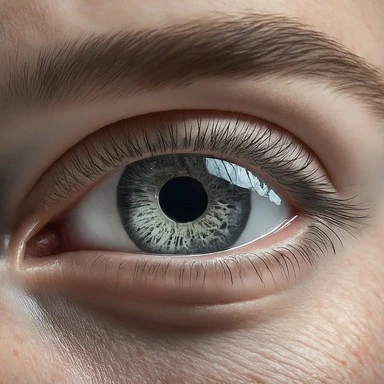
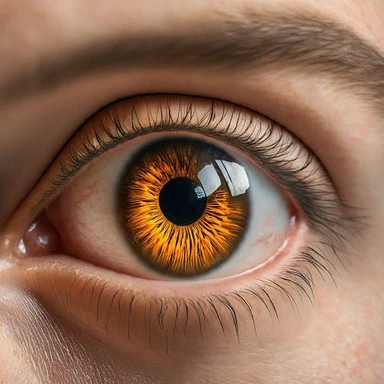
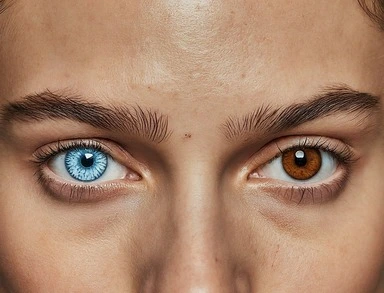
What Determines Eye Color?
Eye color is determined by multiple genes, with two main ones playing a significant
role:
- OCA2 gene: Responsible for brown and blue eyes
- HERC2 gene: Affects the OCA2 gene's expression
These genes influence the amount and type of melanin (pigment) in the iris, giving
eyes color.
The OCA2 gene encodes a protein called the P protein, which plays a role in the
production and distribution of melanin within the melanocytes of the iris. A functional OCA2 gene leads to
higher melanin concentrations in the front layer of the iris, producing brown eyes. A mutation or altered
expression of OCA2 reduces melanin, leading to lighter eye colors such as blue or gray.
The HERC2 gene sits adjacent to OCA2 on chromosome 15 and contains a regulatory
sequence that acts like a switch for OCA2 activity. A specific single nucleotide polymorphism (SNP) in HERC2 —
the rs12913832 variant — is the primary genetic switch between blue and brown eyes in people of European
descent. Individuals who inherit two copies of the brown-eye variant at this SNP will almost certainly have
brown eyes. Those who inherit two copies of the blue-eye variant will likely have blue eyes. Heterozygotes can
have any color from blue to brown depending on the full combination of variants across all relevant genes.
Beyond OCA2 and HERC2, researchers have identified at least 16 other genes that
contribute to fine variation in eye color. These include SLC24A4 (linked to blue vs. non-blue), TYR (linked to
melanin synthesis), TYRP1, and SLC45A2. The combined influence of all these genes means that eye color can
vary continuously across a spectrum rather than falling neatly into a few discrete categories.
The physical structure of the iris also matters. The iris contains two main layers:
the posterior epithelium, which is always heavily pigmented regardless of eye color, and the stroma (the front
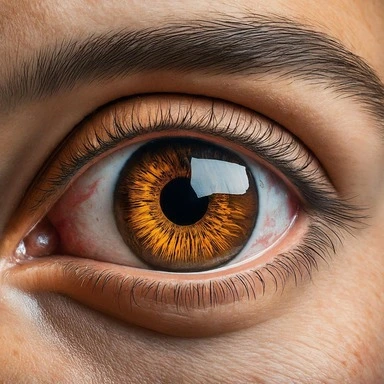
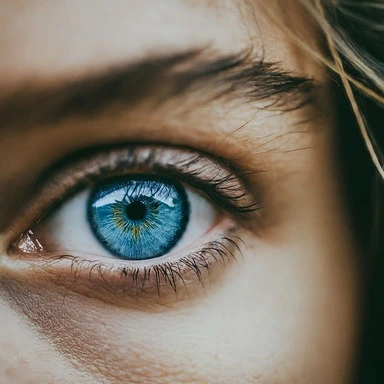
layer). In brown-eyed individuals, the stroma contains abundant melanin. In blue-eyed individuals, the stroma
has very little melanin, and the color we see is the result of light scattering off the stromal fibers — the
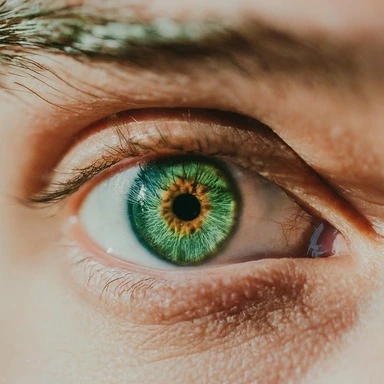
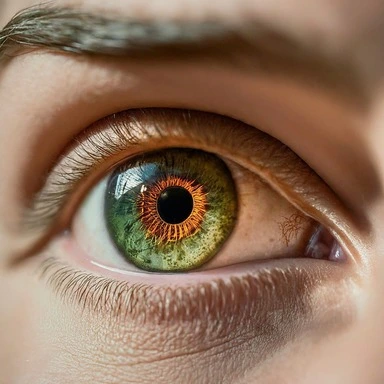
same Tyndall effect that makes the sky look blue. Green and hazel eyes fall between these extremes, with
moderate melanin levels that interact with light scattering to produce the characteristic green or mixed-tone
appearance.